
ARCH TRENDS
If you’re an interior lover you have probably noticed that arches are currently a top interior trend. From arched walkthroughs and built in shelving to bedheads and mirrors, there are a whole host of stunning arch inspirations.
This popular shape creates softness through its rounded edges and adds a feminine touch in areas of the home otherwise filled with hard surfaces. The repetition of arches is also very popular, creating continuity and highlighting a more cohesive and eye-catching style. Melissa Lunardon Interior Design loves to incorporate arches into home designs both within the structure and styling. Examples of ways arches can be used include:
Arched walk throughs
Use arches to create internal walk throughs from the main living areas through to bedrooms and bathroom areas.

Arched built in shelving
Built in shelves can be made in the shape of an arch, an eye-catching solution to your average shelf and perfect to use as a bookshelf or to showcase your special trinkets, photo frames and prized objects.


Arched mirrors
An easy way to introduce and to repeat arch shapes in the home. Arched mirrors are a great alternative if you love this trend but don’t have any arches in the actual architectural structure of the home.


Arched furniture
Curved furniture including arched cabinets arched headboards are very popular, bringing a well-rounded elegance to any room.

HOUSEPLANTS HAVE THEIR DAY IN THE SUN
No longer a relic of the 1970’s, houseplants are once again having their day in the sun. They are the perfect styling solution in almost every room. If you don’t know how to fill a space, popping a plant in a tricky spot usually solves the problem perfectly.
Styling with plants has many benefits. They are naturally beautiful and can help soften architectural features in modern homes. Greenery also provides a contrast to timber floors, painted walls and other hard finishes like tiles, glass and appliances. If you want to step up your styling game with plants, pay attention to light, scale and layers.


Light
The first rule when creating your own thriving green metropolis is to understand the light. Selecting the right plants and placing them in the right zones will allow them to thrive.
Areas with low to moderate indirect light are typically hallways and low spots in the living room where there isn’t as much light filtering through. These areas will want low light loving plants like Mother in Law’s Tongue. A room with bright, indirect light or full sun you will want to look for light lovers like succulents and cactus. Remaining areas will typically experience medium bright, indirect light. Most house plants enjoy this kind of light.

Scale
Just like with furniture and accessories, scale is an important consideration for plants. If you have a spot on the floor calling out for a plant, you’ll want something with height so it feels like part of the room. Want a plant on your bedside table? It needs to be small enough to allow for other essentials like a lamp and books. Consider your plants and pots as living decor items and size them accordingly.


Layers
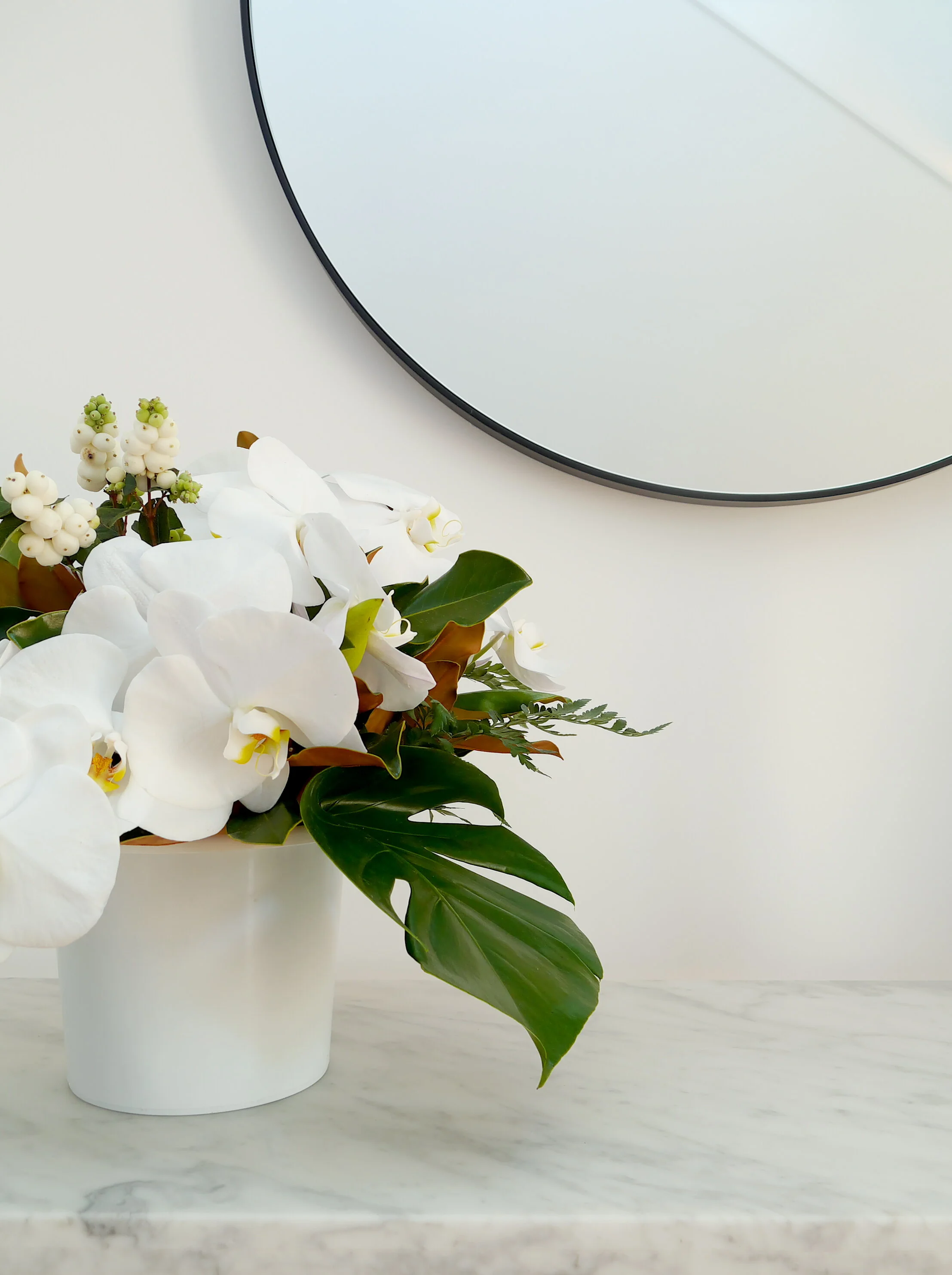
Plants look amazing when layered together. Sometimes one isn’t enough, especially if you are after that lush tropical vibe. When grouping plants together use a theme to unify your look. Consider the height and shape of plants, too. Look for a taller, straight plant to pair with a bushier one, then maybe a short and squat one. This ensures that each plant gets its own moment. You can also layer plants alongside other decor items, such as using an artwork as a backdrop.

BIOPHILIC DESIGN FOR WELLNESS
Bringing Nature Indoors
After a long time in lockdown, and that lockdown having sent many people to work from home, there has suddenly formed an onus on architects and designers to make workspaces more focussed and aware of wellness. If you haven’t already heard of the term, ‘biophilic design’ you soon will as it continues to garner a substantial following. Although it has been around since the 1980’s, this design principle is only now gaining momentum in the wake of COVID-19, which made many feel disengaged from the environment.
In brief, biophilic design is how you engage nature in your own environment. It is about incorporating the outside world into the inside world, harnessing plants and design elements from the natural world. Research indicates there are many wellness benefits that come from incorporating natural elements into your living, work and educational environments. After all, in terms of evolution, living as one with nature is ingrained in our blood.


Designing Biophilic Homes For Improved Health and Wellbeing
In the scale of time, humans are relatively new to the concept of living life indoors. People are in fact meant to be in union with nature, so it is a great idea to embrace nature in homes and work spaces to improve general wellbeing. It is relatively easy to bring nature inside the home with plants. Taking care of them will not only help them thrive but you will find it also helps your mind thrive!
Beyond simple styling, actually bringing nature into the world of architecture and design is increasingly important. Coming home should be something that feels good and you are proud of – that’s the first step of wellness.

Key Features of Biophilic Designs
Natural light such as skylights, large windows, glass doors and clerestory openings
Indoor and outdoor gardens that seamlessly complement the environment of the home
Outdoor living spaces created in conjunction with a designer
Natural materials like concrete, timber, rock and biomimetric facades
Calming earth tones and varying blues, greens and greys
Organic shapes via architectural elements, incorporated throughout furniture and décor
Non visual environmental connections such as air flow, sounds of water and the smell of plants (including trees, flowers and herbs)


HOME WORPLACES + SPACES - CULTIVATING PRODUCTIVITY AT HOME
Working from home is now a longer-term proposition, meaning home offices are increasingly a consideration for homes. Getting it right will help make a stylish work space while enabling productivity.
In 2020 when COVID-19 began, most people thought they might be working from home for a few weeks. But as the pandemic continues, it’s increasingly apparent ta well designed work station is needed at home to adapt to new ways of living and working.

One of the benefits of working from home is the fact you can design your space a lot more stylishly than most corporate spaces. However the same practicalities apply, such as storage and ergonomics. Having the right space to productive when working from home is important, which means the natural tendency to use the dining table is not ideal. Try to set up a work space which is quiet and away from disruptions or high traffic areas of the home. You’ll find you are more productive and cultivate a healthier work life separation.

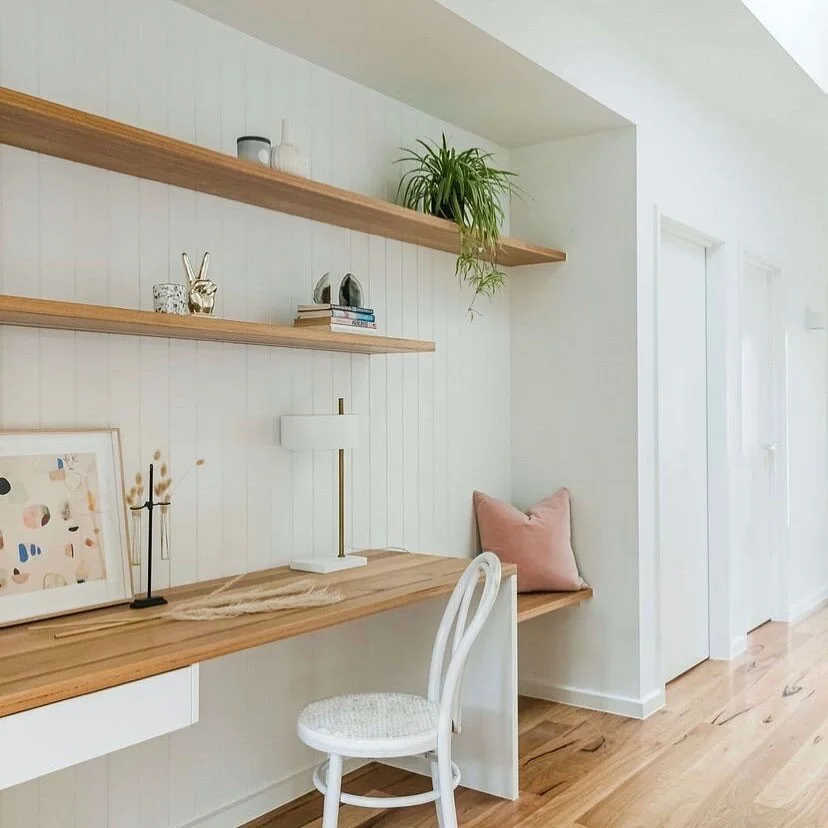
Measurements are important. Decide at the outset the size of the space or nook, considering how many people will use it and how often. The desk, built in or not, should be at least 600mm deep, and you should have ample storage. Aim for a combination of shelving for books and decor, and cupboards or drawers for unsightly items.

Once the basics are covered, selected finishing decorative touches add character and personalisation to your work space. Typically this includes indoor plants, wallpaper, personal photographs, mementoes and, of course, a lamp. While natural light is the ideal, you’ll often still need a task light to work by.

If, like us, you are currently confined to the barracks and working from home, why not take it as an opportunity to up-style your home office and work space? We can guarantee it will not only cultivate productivity, but also help that extra little bit with motivation when the couch, television and fridge are so near! If you want some help, we’d love to hear from you here at Melissa Lunardon Interior Design. Book a consultation call today - it’s free and could be the best thing that lockdown brings.
THE PANDEMIC & INTERIOR DESIGN - HOW COVID-19 AND HOW LOCKDOWN IMPACTS THE FUTURE OF DESIGN
The lifestyle shift created by COVID-19 and lockdowns has reshaped how Australians are choosing to build and renovate their homes. From an increased focus on hygiene, to rallying against shrinking block sizes, the story of Australian architecture and design is taking a new turn.
With industry data showing that over 40% of home buyers have changed their preferences for their properties, interior design is rapidly adapting with a range of new trends influencing the homes of 2021. Here are 3 of them that are influencing design right now:

More spacious homes
The beginning of 2020 saw increased interest in more sustainable ‘micro homes’ and an acceptance of shrinking block sizes in metro areas. However, in less than a year, our homes took on new roles, including home schooling, work offices and gyms. Homeowners are subsequently looking for a home office or study nook, additional living spaces and separate retreats for privacy.

Rise in renovations
Home isolation is known to inspire renovation, as owners have time to reflect on potential improvements to their properties. Leading industry bodies are now expecting further growth in renovations, such as kitchen and bathroom updates. Additionally, without the ability to travel, bringing the holiday feeling to the home has become increasingly important. The idea of creating a sanctuary at home is not new, but it has certainly become a driving force in 2021.

Refreshing home exteriors
Homeowners want their properties to reflect their style. Many more experienced homeowners are realising that they can cost-effectively redefine their homes’ exteriors by re-cladding or with cladding features. Homes lacking architectural shape can be enhanced by varying lines, textures and colours. This can be achieved by incorporating a larger range of materials, providing literally endless design possibilities. This is perfect for people who have rediscovered their creative sides during lockdowns.

With lockdowns continually threatening our lifestyles, It is clear the home space is deemed increasingly important. Considerations such as fitness solutions for home, home entertainment, working-from-home business spaces and study-at-home education solutions are now paramount.
For more detail around these issues and lessons from lockdown, please read my Lessons From Lockdown blog post (find it at: https://www.melissalunardon.com/designtalktv) or read the July issue of The Design Journal (read it at: https://static1.squarespace.com/static/57d4ee16d2b85782f9b887d8/t/60f0f50ac9cf4d4000095ffb/1626404228521/TheDesignJournal_Edition1_16July2021.pdf)
ITS TIME TO GET COSY - Styling for Winter
We have once again entered the season of warm blankets, mugs of coffee, oversized jumpers and huddling by the fire. Now is the perfect time to bring the outside in with furniture pieces made from timber and a nod to a more earthy colour palette. There are plenty of warm colours to help you achieve the perfect space to snuggle. Think rusts, warm greens, charcoal and browns, and you will be right on trend.

It's only natural we spend more time in our bedrooms in winter, which means bedrooms take centre stage. We therefore need to make sure it's our own personal little sanctuary, a place to escape the chill. In this little personal sanctuary, a good design will enable form and function to co-exist. The goal is a stunning bedroom that feels as good as it looks, and one which will ensure you have a quality night’s sleep.

We love a statement bed with matching bedside tables, finished off with beautiful luxe linen. Quality materials are essential for a high-end aesthetic, but apart from that seek chic, cosy and expressive linen for an iconic winter bedroom look.

When styling your bed, it is important to consider both form and function. Here are our 3 top tips for styling your bed:
1. Pillow talk
Use soft, fluffy pillows that fill out the pillowcase for styling purposes. This will make your bed look like something from a magazine, but it is not optimal for sleep quality as they often don’t provide the right neck support. Have another actual sleeping pillow that is ergonomic and supportive. It might not look as nice, so pop the fluffy pillow on top of your sleeping pillow when you make up the bed to achieve both a stylish look and a good night’s sleep.

2. The right light
Choosing the right lighting for your bedside is important. Soft, nurturing light is ideal, provided it is strong enough to enable reading and other bedroom tasks. To achieve a good balance, look for a style where the actual light globe is covered in some way, either with a fabric or glass shade, to diffuse the point of light.

3. All covered up
Just as you would dress yourself in different layers of clothing, you should do the same with bedding. Choose sheets and blankets in natural fibres like cotton, wool and bamboo to regulate your body temperature throughout the night. When it comes to colour, muted tones help to create a more relaxed vibe and are generally recommended with some interesting shapes and textures in accent pillows or cushions.

With these 3 tips, you’ll achieve a magazine-worthy bed where you can sleep well and await the warmer Spring weather in comfort and style.

LESSONS FROM LOCKDOWN
Lessons from Melbournian designer and The Design Journal editor, Melissa Lunardon, while living in the world’s most locked-down city of the COVID-19 pandemic.
Lessons from Melbournian designer and The Design Journal editor, Melissa Lunardon, while living in the world’s most locked-down city of the COVID-19 pandemic.
"No one fully foresaw the extent of the COVID-19 crisis, but as we emerge from our latest lockdown in Melbourne there are many lessons I have learned which apply to me personally, to design as an industry, and to our society as a whole. Like my fellow Victorians and much of the world, I have been confined to barracks for a while now, and used that time to rethink my business and the ideal interior for my clients. The lesson to me is clear: the pandamic and lockdown is devastating, but it is creating new needs and new trends in design we must be aware of and responsive to. Ultimately, the success of designers and enjoyment of the home for our clients relies on how well we can reinvent activities and designs to adapt to the “new normal” across Australia and worldwide."
Innovate the home office
COVID-19 lockdowns presented the opportunity for innovative solutions. It became apparent that no study nook can cut it as a home office if the acoustics are sub-par. The considerations of sound quality, echo and separation from noises made by pets, children, partners, neighbours and traffic became real and urgent concerns. The inclusion of this important criteria presents an opportunity to really meet form with function.

Home configuraton
Our configuration needs have altered as our homes suddenly became a place for more than just rest. They instantly became schools, corporate offices, gyms and more! Moving forward, I think this means we’ll see a trend towards closable rooms as opposed to open-plan configurations. This includes hallways, which can serve as a valuable vestibule as well as a subtle but effective transition from outside to inside.
Bring the outside in
With some of the strictest lockdown regulations worldwide inflicted upon Melbournians, we quickly learnt the appeal of the outdoors as our ability to leave home was restricted in both frequency and duration. From a design perspective, that means that now more than ever we should seek to configure ways to bring the outside in. Balconies are a great way to achieve this, especially for those in apartment or unit blocks without access to a private rooftop.

Get a garden
For Aussies with a little more space and a ground-hugging home, I suggest designers help clients optimise a sense of egress by landscaping the pockets of garden that sit immediately outside doors and windows. In the past our industry has often tried to maximise internal space by building out to the boundary, but with even a small garden you benefit from light infiltration. In normal times that’s a nice-to-have, but in these days of confinement it’s a blessing and it’s something I’ll be advising clients to incorporate into their homes.
A move towards subtlety
From an aesthetic perspective, I expect the inevitable economic crisis will see the end of many clients desire to make a splash by conspicuously dropping cash. Instead, I predict that quiet, nuanced gestures and subtle surface textures are going to become increasingly important as people move away from “processed” finishes. Light, colour, textures and intelligence of custom joinery will become increasingly important in our work going forward.

Greatest lesson for designers
Given the above, what is my greatest lesson from confinement? Try your hardest to create gym space in every home and have a heightened empathy for four-legged friends! People are needing fitness, work and dedicated pet spaces inside their homes. It’s a challenge but I love the way design can shape itself to the emerging needs of a culture, and as a designers this is a great opportunity to reinvent ourselves and our work to adapt to the disruption of a worldwide pandemic.
TOP 5 CHRISTMAS TABLE STYLING TIPS
Christmas is all about spending quality time with family and friends and the meals you share, and what better time than Christmas to style your dinner table with festive delights!
Recently, I had the honour of styling the first product photoshoot for Just A Glass. Using a few simple techniques, we were really able to show off the Australian made products they have to offer. This got me thinking, with a few tweaks, the same tips will show you how to transform your ordinary dining table into an aesthetically pleasing Christmas wonderland!


Tip 1: Just try to keep things simple.
Avoid using tall arrangements as you want to be able to see and chat to your guests from across the table.
Tip 2: This one is a bit of a thrifty tip! Consider using Christmas wrapping paper as a table runner, bet you never thought of that one! To ensure it doesn't look distasteful, measure the length of your table and make sure you have about 20cm overhanging on either end.
Tip 3: Now to decorate the runner! Layer it with native greenery; some of my favourites are eucalyptus or wattle leaves. Arrange these in vases of various heights, remembering we don't want our decorations to get in the way of our view of the other side of the table though.
Tip 4: A centrepiece doesn't always have to be laid in the middle of the table. If space is a problem, try hanging a beautiful ornament above your dining table, in the spirit of Christmas, why not try a wreath?!
Tip 5: Don't be afraid to mix things up! Add a combination of tea light candles and/or battery operated fairy lights dotted across the centre. I know here instead of tea lights I have used blueberries, but they do present the same effect, right?
For the finishing touch, tie cloth napkins with pretty ribbon or twine and add cinnamon sticks or rosemary for a final touch. Not only will your table look beautiful, but it will smell wonderful too!
Being able to create a relaxed but beautiful environment for this festive season doesn't have to be difficult. You just have to remember not to go overboard and keep things simple. I’d love to see your Christmas table creations - just be sure to tag me so I can share!
How much it REALLY costs to furnish a room

We've heard of fast food, and most likely fast fashion... but what about fast furniture?

Remember when furniture was made to last and passed down through the generations? Not so much anymore as most of today’s fast furniture isn’t made to last and uses low quality materials – and labour.
Buying copycat pieces from mass produced retail stores, while it may be cheap at the time of purchase, it’s going to cost you in the long run – not only financially but environmentally and ethically. Think adding to landfill (and might I add, furniture is one of the fastest growing landfill categories!).
Which brings me to budgeting for furniture…
As an interior designer, I’ve worked with a range of varying budgets, so my intention with this email is to help you understand what long lasting, quality furniture really costs.
We love to create spaces for our clients that feel authentically you and not something that reflects the current trends – or cheap, mass produced furniture retailers.
You’ll see in the table, I have put together a budget comparison for a living room showing what the overall cost difference is between each item and each price bracket.
I have ensured that each item's price has enough wriggle room to go over budget, which from experience, most clients do. The price points I have indicated for each item, will provide you with quality made furniture, built to last.
I also think it’s perfectly fine to mix pieces from different price points but invest in quality pieces that will last 10+ years eg. dining table and sofas. It is important to select the right mix of furniture that will give you lasting enjoyment not a temporary fix.
Think of bringing back the generational heirlooms!
If you are wanting to update a room in your home and feel overwhelmed if all the choices out there or don’t know what stores to go to, you can book in for a complimentary design call with me and we can chat about how we can help you create a beautiful home that reflects your own personal style! Click on the button below to secure your call!
Top 5 Homeware Stores You Must Visit
My clients will often ask me where I source my homewares from. Well, I’ll let you in on a little secret. I judge a good homewares store by looking at their range of cushions, vases and wall art. Surprising, I know! But it’s true. If they can pull off a stylish range of cushions, then they’ve won me over. And if they tick those boxes, then I know it's a store I can keep going back to for a variety of projects!

Let me list them below for you with the links (you’re so welcome!):

Casetta Living: For the ultimate at-home, café-style dining, you can’t go past the gorgeous Robert Gordon dinnerware. Their coffee table vases and shelf styling, oh and not to mention their stunning range of table linen is also a MUST at Casetta Living.
Greenhouse Interiors: Ok, wow! The most amazing range of Australian artists are featured here at Greenhouse Interiors. It's an incredible explosion of colour! So, if you’re stuck on what to buy me for Christmas – well, anything from here would suffice really! And what’s better – sign up to their mailing list and you’ll get 10% off your first order.
Jumbled Online: Where do you start with Jumbled Online? They have a fabulously enormous range of home and lifestyle products where you could find something to suit everyone’s taste. Heading into the silly season, you’re sure to find some great gift ideas here too!
Sedonia: A very cute brick and mortar store based out of Seddon in Victoria. A hidden gem, some would say! They stock a huge range of brands – and, let me tell you, some pieces are just too good NOT to buy!
Simple Form For the lovers of all things Scandinavian and Japanese minimalism – this is for you! The Alessi Plisse` is on my wishlist (ahhheemmm Santa, can you hear this?). Oh, and sign up to their newsletter and you’ll get 5% off their Elemental Range.
I could probably list another 10 or so, but these are my all-time favs!
Have you checked these out before? Tell me what your go-to online homeware stores are...
HOW TO STARt THE RENOVATION PROCESS-WEEK 4

So, here we are with the final piece of the renovation puzzle … getting the professionals (ie. the experts) involved in your renovation. If you’ve just joined us you will likely want to take a few steps back and catch up, and you can do that here where you’ll find parts 1, 2, and 3 of our Renovation Series.
Part-4: Getting the Professionals Involved in Your Renovation

Okay, you’ve considered your options and have decided what you’re going to renovate, you’ve come to a decision on how much you can afford to spend on this renovation, and you’ve worked out what you like and what’s your personal style. I’m sure you’ve had fun getting to part-4 … but there’s even more fun to come (and the immense satisfaction of a completed reno!).
Obviously, there are professionals that it is in your best interest (and in some cases a legal requirement) to get involved in any renovation project: builders or carpenters, tilers, roofers, painters, glaziers, bricklayers, plasterers, plumbers, and electricians.
The other professional that you are well advised to engage (or at the very least consult) is someone like me: a professional interior designer.
Why you might be wondering? After all, you’ve decided on a budget, you know what sort of fixtures and furnishings you want for your home so why can’t you simply book the trades and away you go?
Well, my friends, it’s because in the long run a professional interior designer can save you lots and lots of dollars! I am a qualified interior design professional with more than 12 years’ experience in ensuring that your renovation doesn’t go haywire, and that the result of all the hard work is a home that you love and will be proud of.
Need more convincing? Here are five top reasons why getting an interior design professional should be at the top of your list of priorities when planning a renovation:

1. You save money
Many renovators believe they can save more money, or at least stay within budget, if they go the DIY route. The reality is, that this is pretty much never the case! More often than not, DIY renovation projects top the allocated budget because of unforeseen issues, which a professional could have easily avoided by using their expertise, skills, and knowledge in the field. Not to mention the huge benefits that come with a professional’s supplier contacts and trade prices. Contrary to what you might think, investing in an interior design professional really does save you money!
2. Set a realistic time-frame
When renovating it’s so easy to underestimate the time different parts of the project will take, and added to that are the unforeseen delays that can hold up progress in different areas. Because an interior design professional has the experience gained through many renovations we know where delays are commonly caused and we also know ways to work around those delays. We can give you a realistic expectation of how long the whole renovation project will take and how you can plan for the steps along the way that may require your action (eg. moving off site for a period of time).
3. An interior designer has the ideas!
You’re done the thinking about styles, finishes and colours, and you’ve put together an amazing mood board, but when it comes time to put all that into practice are you absolutely certain that you’re confident in putting it all together? This is where the partnering up with someone who has done this a lot more times than you have is a top-notch investment! Getting an interior design professional involved from the planning stage can give you access to ideas that you can incorporate into your own to get to a result that will maximise space, functionality, liveability and of course keep your personal style.
4. Efficiency!

A professional interior designer has the experience to communicate with your trades and to keep a watchful eye on the progress with your end vision always at the forefront. A renovation is always going to be stressful, and don’t let anyone try and convince to otherwise! But, if you can have someone to oversee the finer details and keep your project manager on her (or his!) toes, why wouldn’t you? After all that end vision is what you’re aiming for and having an interior design professional involved who understands your vision from the outset gives you the upper hand.
5. Adding value to your home!
This is a big one because seriously if you’re going to spend lots of dollars (or even a little) you really do want to ensure that you’re getting more bang for your buck by increasing and maximising the overall value, don’t you?! Interior design professionals have quite a few tricks up our sleeves to bring more functionality and eye-catching style to your home which in turn adds $ signs to the market value.
How are you feeling about your reno project? Nervous? Excited? It’s pretty normal to feel both of those emotions and I hear the same from all of my clients when I meet them … but the end result makes it all worthwhile! The final step in getting your reno project started is to … start!
And starting is as easy as getting in touch with me, booking a FREE online consultation to discuss your plans and to showing me your mood board (I’m always excited to see a mood board!).
We’ll run through the details and look at how we can make it all come together. I really can’t wait to see what you’ve got planned!
As a side to the whole renovation excitement, I want you to know that during this period of isolation and physical distancing I am still very much at work and ready to consult with you about your plans! The only difference is that we’ll be consulting virtually through Zoom … you’ll still be able to show me your plans and your mood boards and of course we’ll be able to talk through what you want to achieve and discuss how we can make that happen. Please drop me an email or click below and we’ll tee up a time to chat!
